

Spotlight Trees
deWilde Wholesale Nurseries, Inc.
Green Geyser Cedar
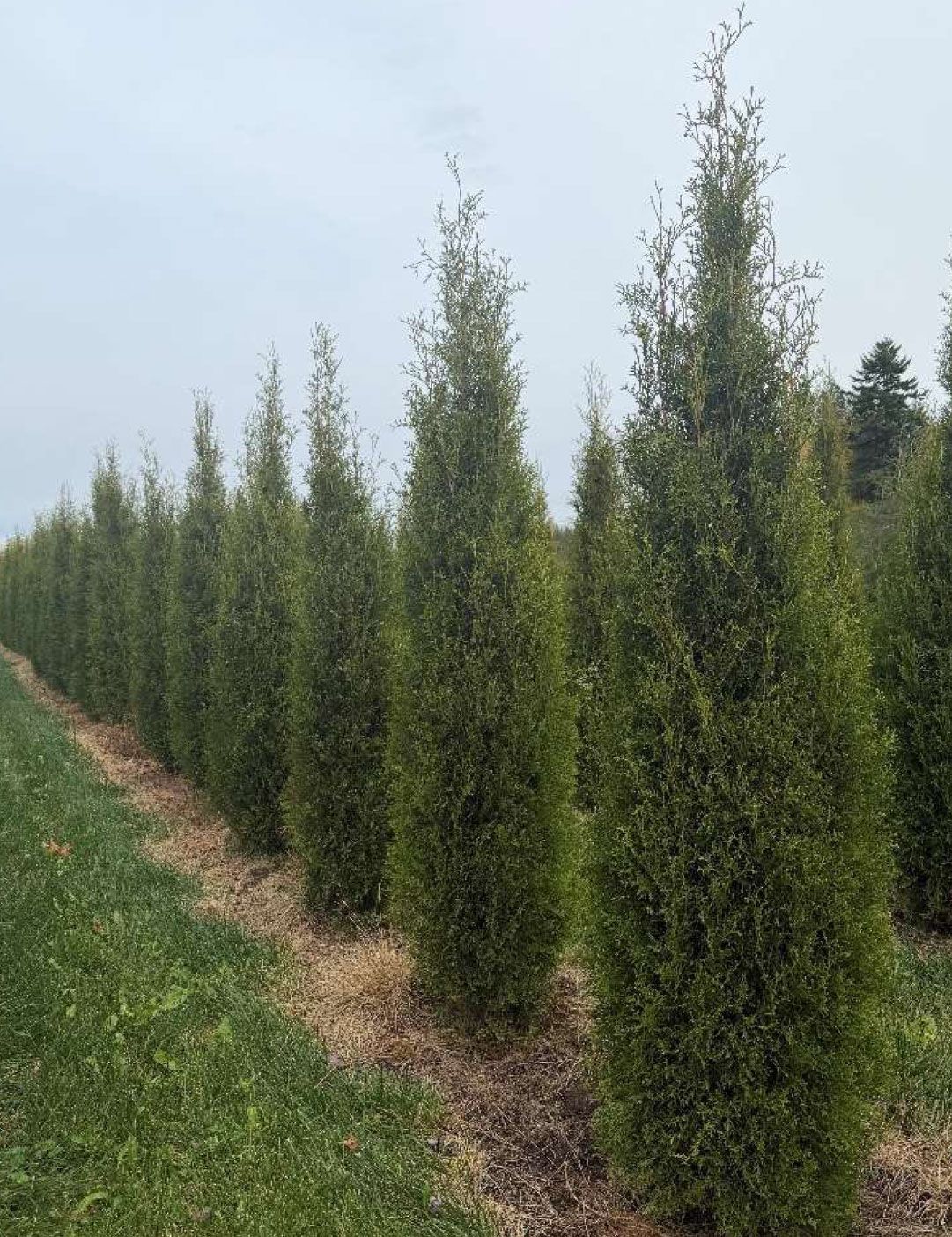
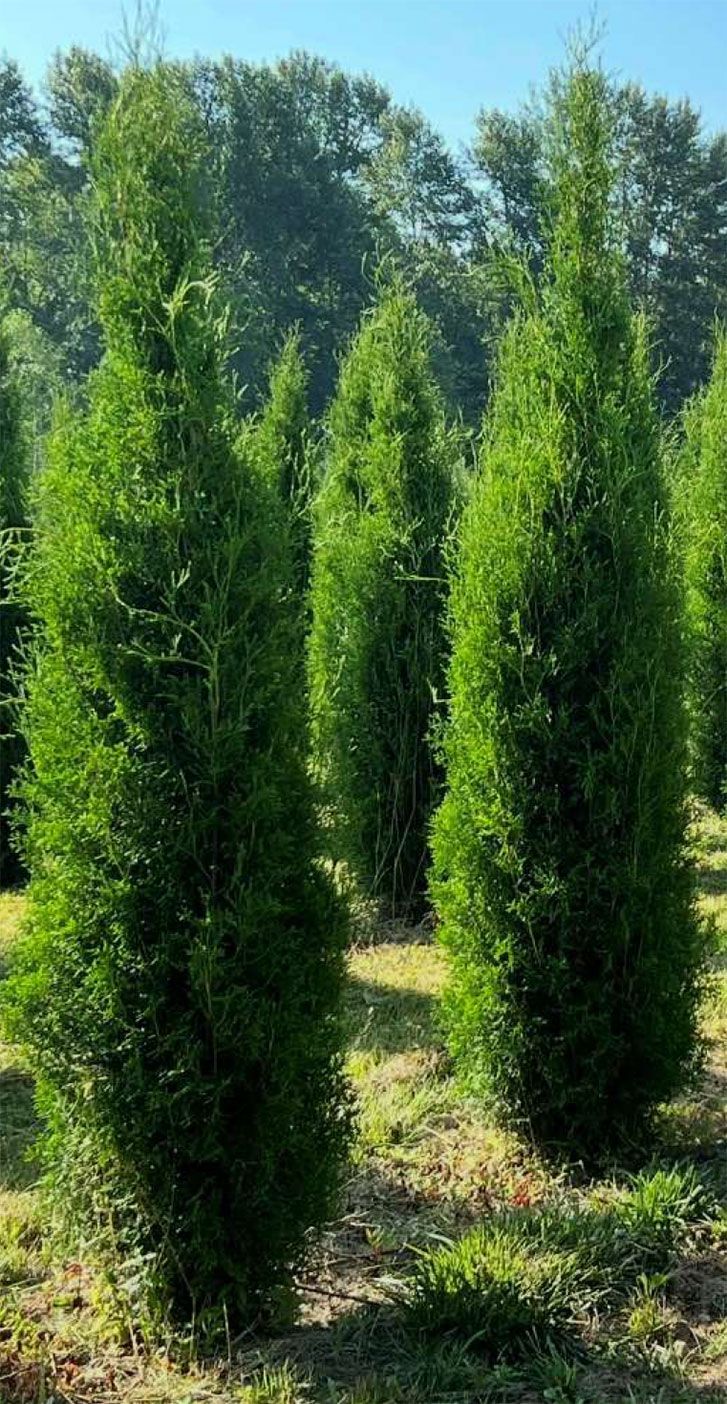
‘Green Geyser’ Cedar (Thuja occidentalis) is a tightly columnar cedar with curling branchlets that spray outward, softening their silhouette and bringing additional textural interest. In a light breeze, these branchlets create a sense of motion reminiscent of a fountain. Green Geyser cedar is surprisingly tolerant of water-saturated Winter soils, similar to ‘Smaragd’ Thuja occidentalis, only with a lighter, brighter green foliage during the growing season and a softer outline. Although it is not naturally a central leader tree, we’ve trained them that way to develop a strong structure, resistant to the heavy wet snow we get here in Whatcom County, WA. These beauties are not sheared, but lightly hand pruned at the end of the growing season to trim the longer branchlets back toward the general silhouette of the plant, so that snow or ice, we don’t have to do anything else to keep their shape through Winter storms. The next Spring, they’ll begin once again to spray gently outward and regain their unique texture. Green Geyser is a great choice for a hedge in a tight space, to create a natural colonnade eƯect around a patio or swimming pool, or as a striking vertical accent near a home or business. This is a deWilde’s Wholesale introduction, resulting from one of our liner suppliers mistaking this plant for American Pillar Thuja occidentalis. We knew shortly after planting these that they were NOT what we thought we were purchasing, so for years we’ve asked experienced nursery professionals to help us identify this cultivar, and no one has ever seen anything quite like it. So, we’re bringing this lovely, original plant to market as ‘Green Geyser’ Thuja occidentalis!
Virginian Cedar
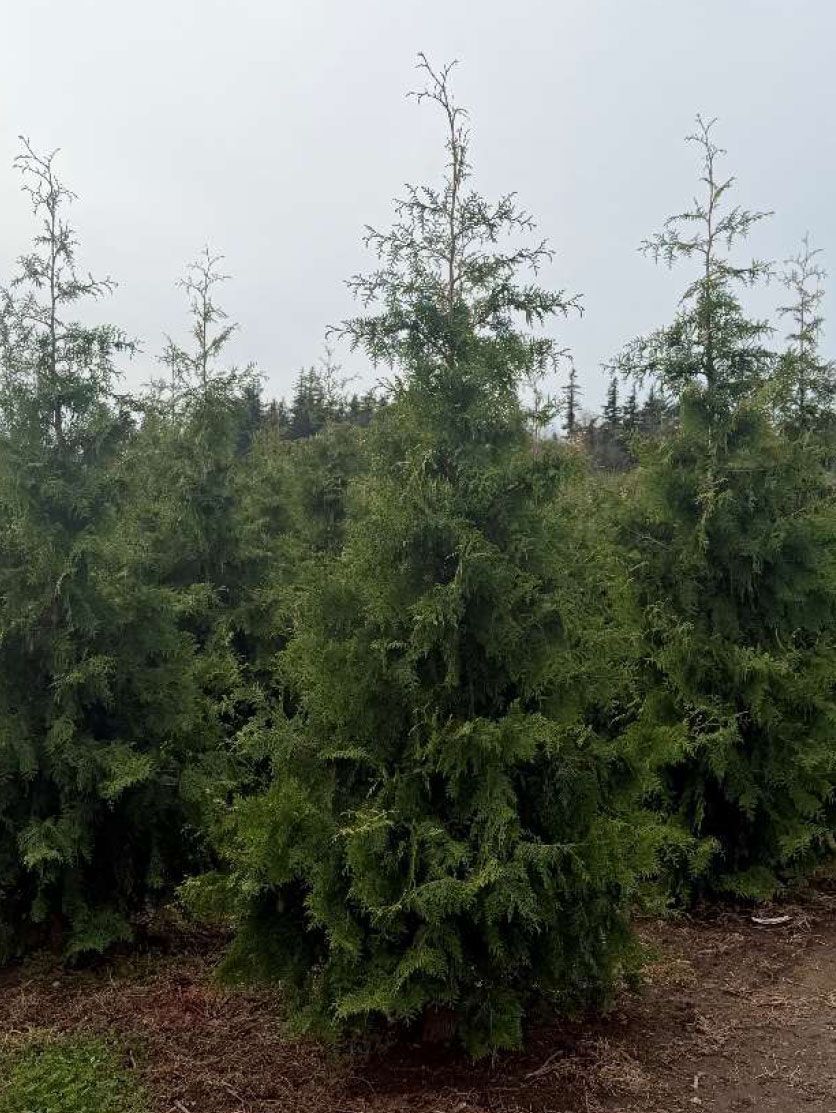
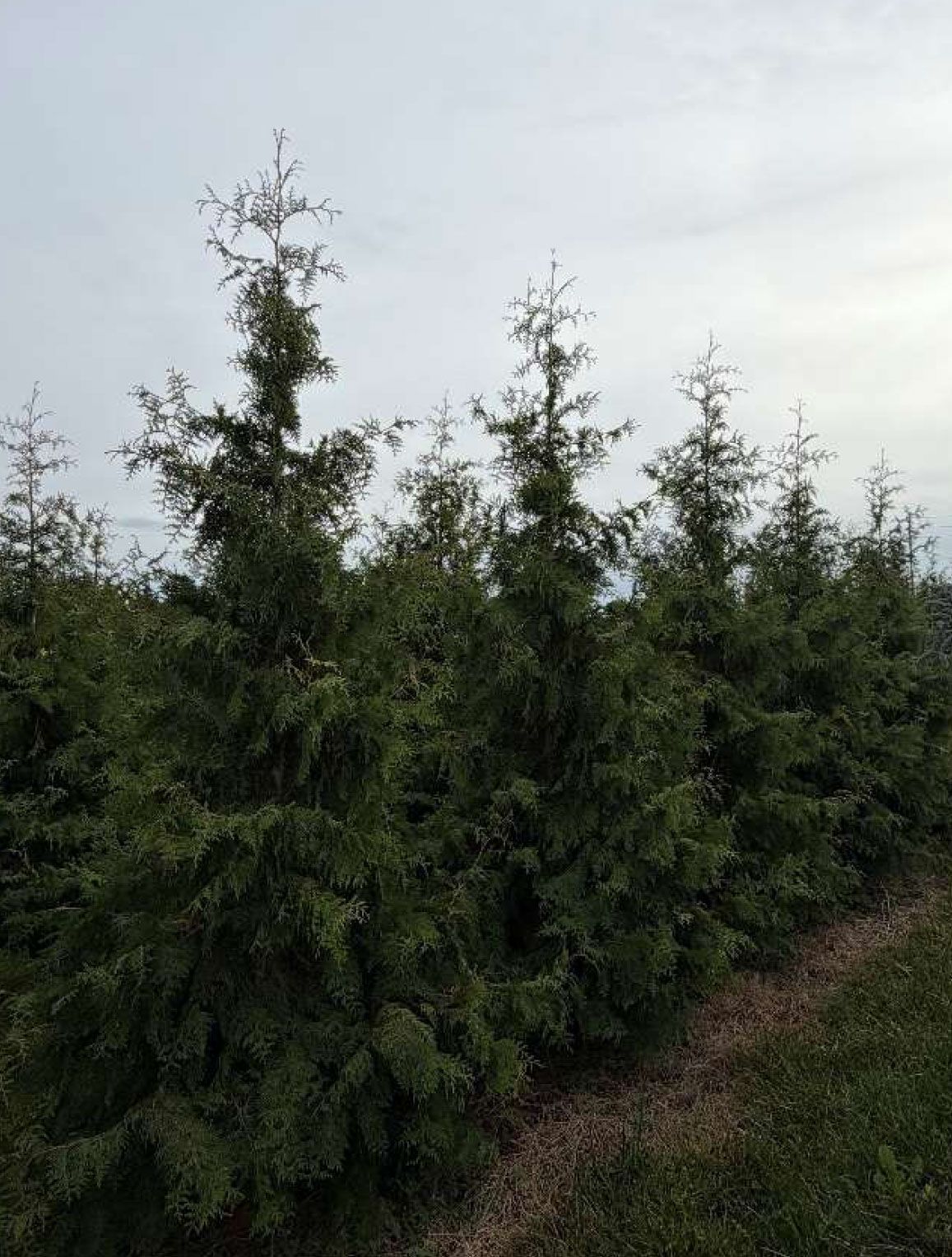
Virginian Cedar is a Thuja plicata x standishii cross, an oƯshoot from the genetic line of the U.S. National Arboretum’s introduction of Green Giant cedar, but with a shorter, denser form. In our fields, Virginian Cedar grows at roughly one-half the rate of a Green Giant cedar, with shorter internodes lending a fuller appearance at a younger age. Its Winter aspect is similar to ‘Gracilis’ Hinoki Cypress with a green darkening towards bronzy tips. As Spring begins to warm the soil, the bronzy tips start to glow with a soft, golden hue that ripens with warmer weather to olive and finally rich green as the summer sun brings the Virginian Cedar into its full glory. Our Virginians are hand-pruned, never sheared, to create a layered effect like a Hinoki cypress, making them a great substitute as an accent tree or as a hedge where space is more limited but a natural, textured effect is desired. In our fields where deer are often a problem, we never see them snacking on our Virginia Cedars, likely due to their Thuja plicata DNA. Virginian cedar isn’t just another Green Giant; it’s a smaller, more refined sibling with its own personality.
Share On: